













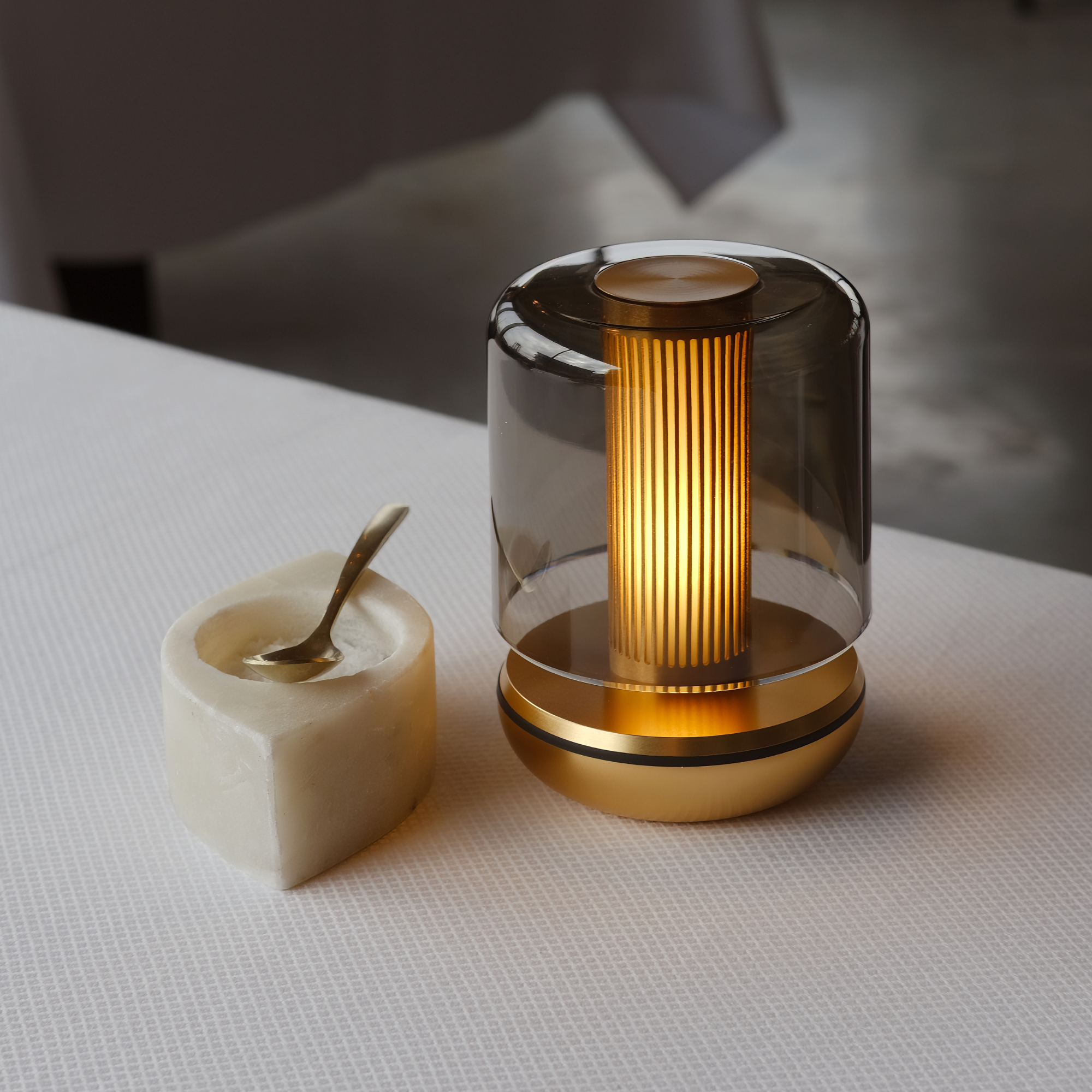
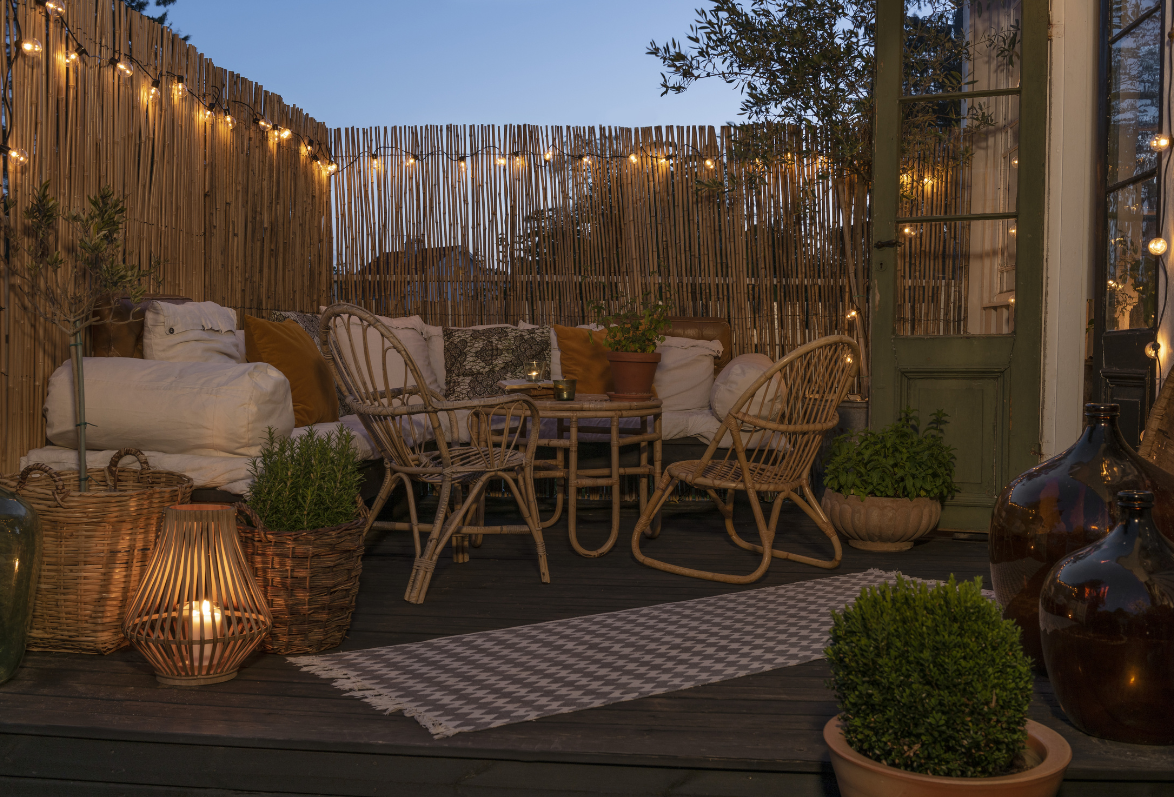
Festoon lights strung along a fence are one of the fastest ways to change how a garden feels after dark. This guide covers whether it is a good idea for your particular fence, the different types of fence lights and how they are powered, the best ways to attach them with or without nails, and genuine product ideas for festoon lights, coloured string lights and small spotlights.
Table of contents
- Things to check before you start
- Can I put lights on my fence?
- Types of fence lights
- What is the best way to attach festoon lights to a fence?
- How do you hang lights on a fence without nails?
- How do you hang Christmas lights on a wooden fence?
- Garden fence lighting ideas
Things to check before you start
Before you buy anything, check three things: whose fence it is, what condition it is in, and whether a fence is even the best place for the light you have in mind. Getting this right first avoids wasted money and, in a couple of cases, a difficult conversation with a neighbour.
Is it actually your fence?
Garden fences are sometimes shared or owned by a neighbour rather than the person who benefits from them day to day. Deeds do not always make this obvious, and boundary fence ownership is a common source of neighbour disputes in the UK. If there is any doubt, ask before you drill, staple or nail anything into a shared or boundary fence. Command hooks and cable ties are a safer starting point than anything permanent if you are not certain.
If you rent your home, check your tenancy agreement or ask your landlord before fixing anything to a fence, even with removable hooks. Adhesive hooks can still mark paint or treated wood when removed, and any damage is typically deducted from a deposit.
Is the fence in good condition?
A fence that is already leaning, rotting at the base, or missing panels is not a good candidate for lights, however light the fixing. Festoon lights and cable are lighter than most fixtures, but wind loading adds up over a long run, and a solar panel or lantern hook puts a small but constant strain on whatever it is attached to. Give the fence a firm push in a few places before you commit. If a panel flexes noticeably or a post moves at the base, deal with the fence itself first.
Weighing it up
Fence lighting is popular for good reason, but it is worth being clear about what it does and does not do well before you buy.
| Pros | Cons |
|---|---|
| Low cost compared to a full garden lighting scheme | Provides ambience rather than functional, even illumination |
| No professional installation needed for solar or battery options | Solar output drops in winter and during long cloudy spells |
| Easy to take down, move or replace as your garden changes | Cheaper cable and clips can look untidy if not planned in advance |
| Wide choice of styles, from festoon bulbs to small architectural spotlights | Fixings put continuous strain on the fence, which matters more on an older one |
Can I put lights on my fence?
Yes, provided it is your fence (or you have checked with whoever owns it) and it is sound enough to take a light fixing. Beyond that, a fence is one of the easiest places in a garden to add lighting because it already provides a run of fixing points at a useful height.
Use it to highlight a border, light a path that runs alongside it, or edge a decking rail with a string of festoon lights. Whether you use temporary hooks, cable ties, or wrap lights around the posts, a fence gives you a ready-made frame for the effect you're after.
Types of fence lights
The main decision is how the lights are powered, since that determines both how they're installed and how they perform through the year.
Solar fence lights

Solar fence lights charge during the day and switch on automatically at dusk, with no cable running back to the house. Mount the panel to the fence facing south, ideally with nothing overhead casting shade on it, and it will charge the built in battery through daylight hours.
The trade-off is the UK's grey-sky reality: a solar panel that gets a full day of direct summer sun will run for far longer than one relying on a cloudy winter afternoon. As a real example, our Lumena Cosmic Draco festoon lights take around 8 to 9 hours to fully charge and then run for 36 to 70 hours depending on the lighting mode selected, so a good summer charge can realistically last several evenings. Expect shorter run times in winter.
Battery-powered fence lights
Battery-powered lights give you the same flexibility as solar without needing a sunny spot, since you're not relying on a panel catching daylight. The trade-off is that batteries run down on a fixed schedule regardless of the weather, so you'll be replacing or recharging them on a more predictable cycle than a solar set that simply has a slow week.
Wired fence lights
For a fence light you never think about, wiring into the mains or a 12V transformer removes the charging question entirely. This is the option that needs a qualified electrician, particularly for anything connected to full mains voltage outdoors, since outdoor electrical work has to meet Part P building regulations in the UK. If you only want lights for a few weeks over Christmas, a plug-in set into an outdoor-rated socket is a simpler option than a permanent wired installation.
| Power type | Needs an electrician? | Best for | Watch out for |
|---|---|---|---|
| Solar | No | Fences with good direct sunlight, no easy access to power | Shorter run times in winter and cloudy spells |
| Battery | No | Shaded fences, temporary or seasonal displays | Batteries need replacing or recharging on a fixed schedule |
| Wired (mains or 12V) | Yes, for mains connections | A permanent fixture you want to run every evening without thinking about it | Installation cost and disruption; plan the cable route before fitting the fence panels if possible |
What is the best way to attach festoon lights to a fence?
The best method depends on how permanent you want the result to be. Nails and staples hold festoon lights more securely through wind and rain, but they mark the fence permanently and can accelerate wear on the panel over time, which matters more if you've just had a new fence built. Hooks, clips and ties are non-destructive and better suited to a fence you don't own outright or a display you'll take down again.
How do you hang lights on a fence without nails?
Three methods cover most situations: stick-on hooks, cable ties, and metal clip-on hooks, and each suits a slightly different fence and level of permanence.
Outdoor command hooks
Outdoor-grade waterproof stick-on hooks let you hang string lights without nails or drilling. Peel off the backing and press firmly where you want the light to sit. They come in a range of sizes, including small ones that are barely visible once the lights are up, and they're the easiest option to remove cleanly on a rented or shared fence.
Cable ties
Cable ties hold festoon lights securely through wind and rain, looping around a post or through the gaps between slats. They're more secure than stick-on hooks but more visible, so look for ties that match your fence colour, or use clear ones if you want them to disappear.
Aluma hooks
Powder-coated steel hooks with a square head slot over the top of a fence panel without any fixing at all. They look neater than cable ties in a modern garden and are simple to reposition, since you're only limited by where the top of the fence allows a hook to sit. Space them evenly along the run for the tidiest result.
How do you hang Christmas lights on a wooden fence?
The same three methods above all work for Christmas lights, but since most people take these down again in January, favour the non-destructive options: stick-on hooks, cable ties or aluma hooks rather than nails or staples. For a full seasonal setup beyond just the fence, our guide to hanging outdoor Christmas lights covers the rest of the house and garden.
Garden fence lighting ideas
With the practicalities covered, here are genuine ideas from our own range for lighting a fence, organised by the effect you're after.
Festoon lighting

Festoon lights bring a warm, vintage-bulb glow to a fence line, decking edge or seating area. Our Lumena Cosmic Draco runs a steady warm white 2700K light and is IP44 rated for outdoor use, while the Lumena Cosmic Phoenix swaps the steady glow for a flickering amber flame effect that reads closer to candlelight. Both are solar powered, built from 5m sections so you can extend the run to 10m or 15m, and come with a 2 year guarantee.
Coloured string lights

For a Christmas display, a garden party, or simply a bit of colour along the fence, the Lumena Cosmic Hydra gives you multi-coloured bulbs with a remote control, so you can switch between colour modes without going back outside.
Small spotlights and up/down wall lights

A small fixed spotlight mounted directly to a fence panel or post gives a more architectural look than festoon bulbs, washing light both up and down the timber rather than lighting the whole run. This is the category Hunza is best known for, and their Wall Down Light range (from around £131) is the benchmark for the look, built to last for decades outdoors. For a more affordable way into the same style, the Fabula Summit is a compact IP54 rated up/down spotlight at just 16cm tall, small enough to sit neatly on a fence post without dominating it. It takes two GU10 bulbs and is Class I wired, so it does need an electrician to connect, the same as any mains fitting.
Ready to light up your fence?
Browse our full range of festoon lights, spotlights and solar fixtures at Moonlight Design.
Or call our experts: 020 8925 8639
Related blogs


Leave a comment
This site is protected by hCaptcha and the hCaptcha Privacy Policy and Terms of Service apply.